Dec 31, 2025
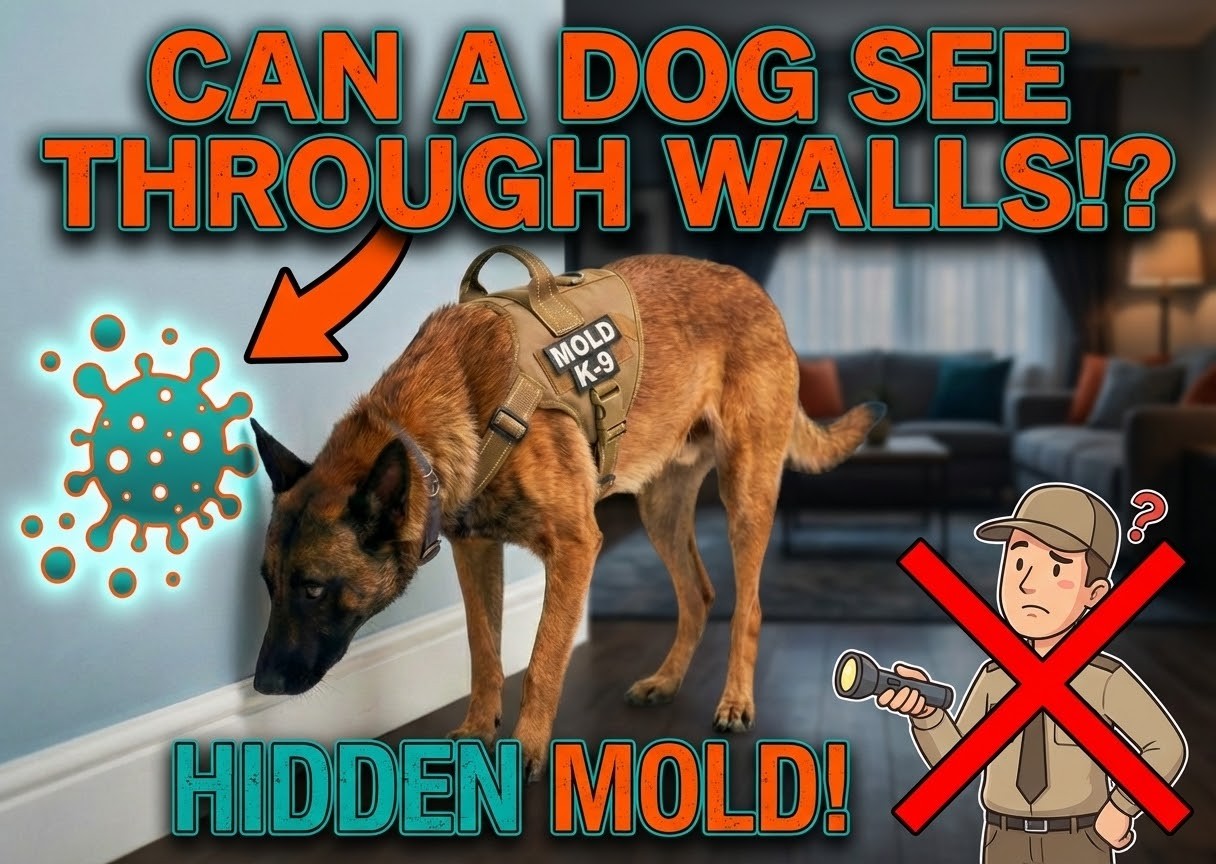
Have you ever walked into a room and smelled that unmistakable, earthy, "old basement" odor, only to look around and see… nothing?
You aren't crazy. And you aren't imagining it.
One of the most frustrating experiences for homeowners is sensing that something is wrong, hiring a traditional home inspector, and being told, "Everything looks fine. No visible mold found."
But you still smell it. You might even be sneezing or feeling sluggish when you’re in that room.
The problem isn't you. The problem is that standard mold inspections have a massive blind spot: They can’t see through walls.
The Limitation of the "Flashlight Inspection"
Most general home inspectors are incredibly talented professionals. They know plumbing, roofing, and electrical systems inside and out. But when it comes to mold, they are limited by biology.
A standard mold inspection is primarily visual. The inspector walks through your home with a flashlight and looks for:
Discolored drywall.
Water stains on the ceiling.
Visible fuzz or growth in corners.
If the mold is growing on the outside of the wall, they will find it.
But here is the scary reality: Mold loves the dark. It prefers to grow in the spaces you can't see—the backside of drywall, underneath carpet pads, or inside your HVAC ductwork.
If a pipe leaked inside a wall three years ago and was fixed, the wall might look dry and perfect today. But inside that wall cavity? A colony of mold could be thriving, releasing spores into your air through tiny outlets and baseboards.
A human with a flashlight—no matter how experienced—simply cannot find that.
Why Moisture Meters Are Not Enough
"But my inspector used a moisture meter!"
That is a great tool, but it has a catch. A moisture meter detects wetness, not mold.
If you have an active leak right now, the meter will beep. But if you had a leak six months ago that has since dried out, the meter will read "Dry." Meanwhile, the mold that grew during the leak is still there, dormant but dangerous, and the meter won't make a sound.
The Solution: Don't Look for Mold, Sniff It Out
If you wanted to find something hidden inside a suitcase at the airport, you wouldn't ask a security guard to guess what’s inside. You would bring in a detection dog.
Finding mold works the exact same way.
While humans rely on sight, dogs rely on scent. A human has about 5 million scent receptors. A trained detection dog has up to 300 million.
This is where Mold Dog Network changes the game.
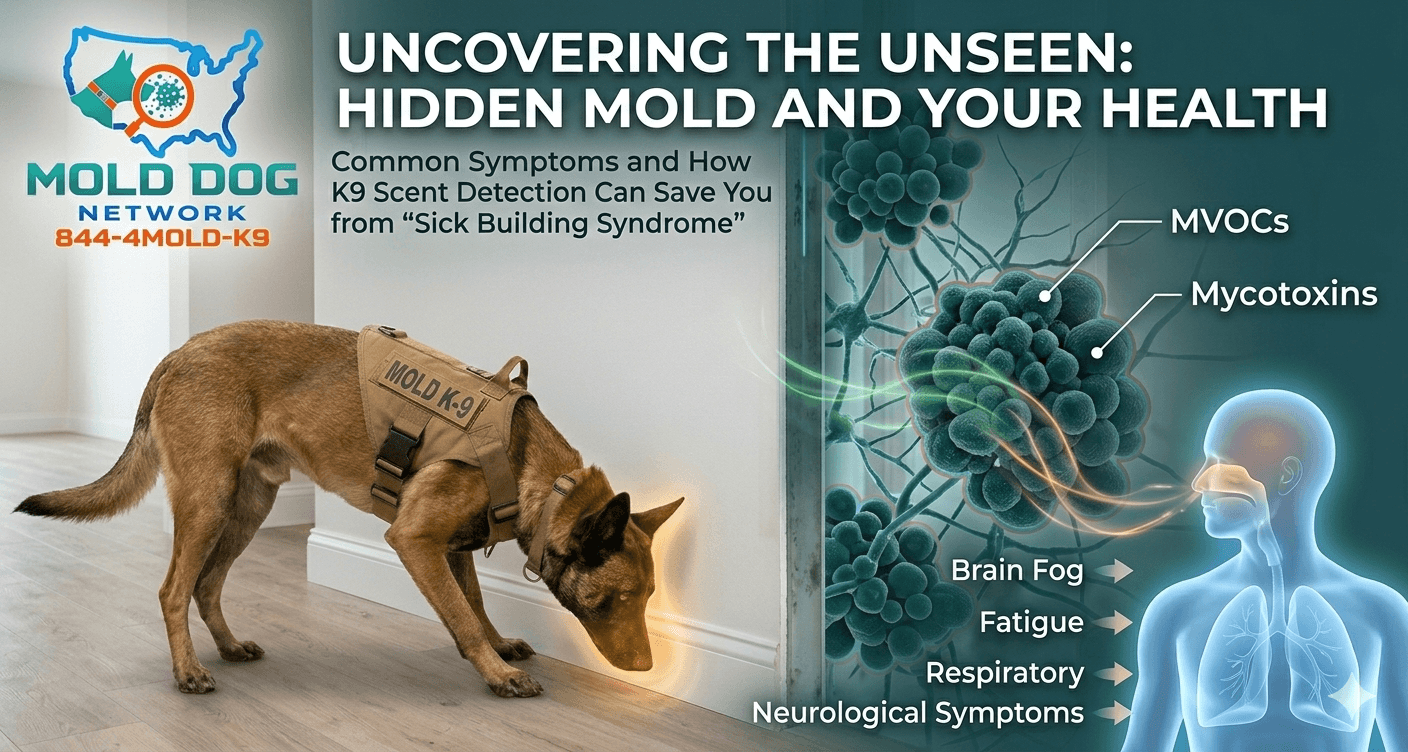
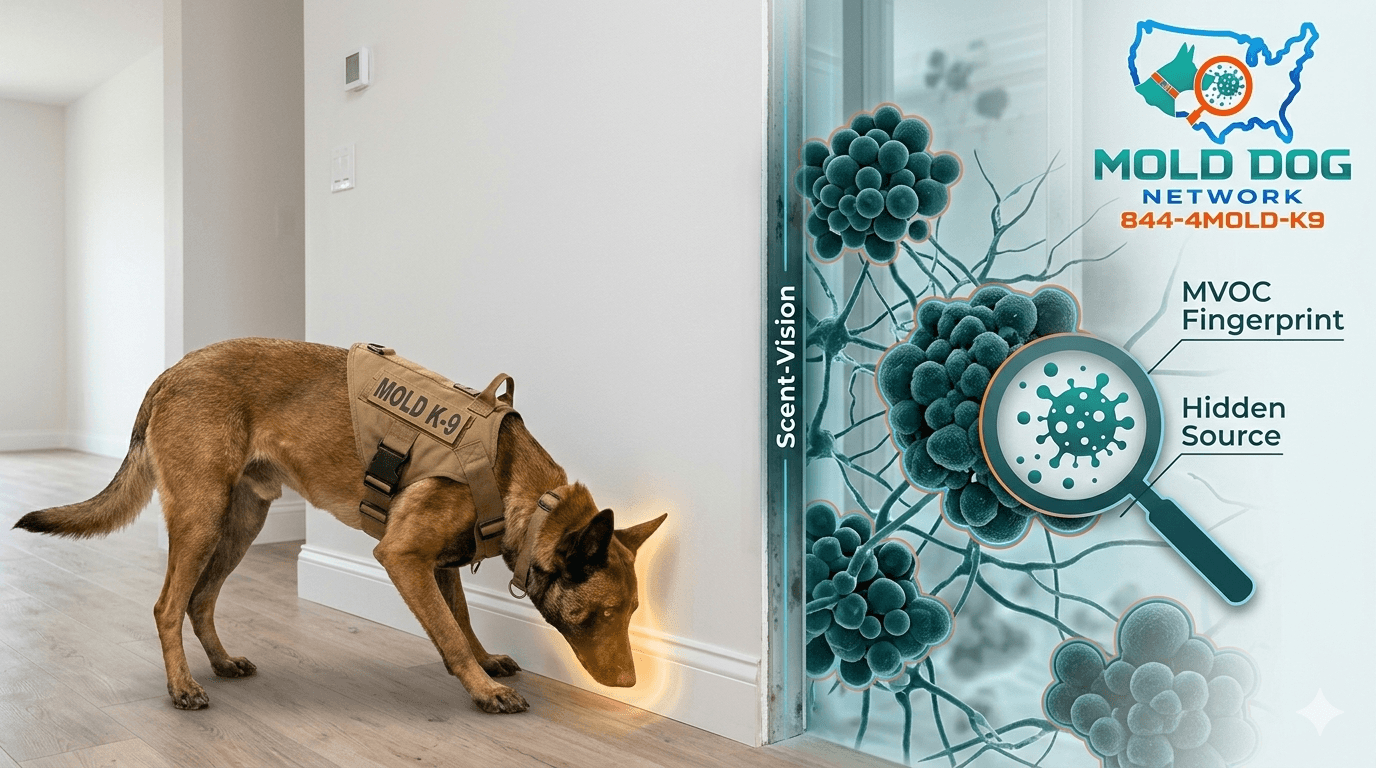
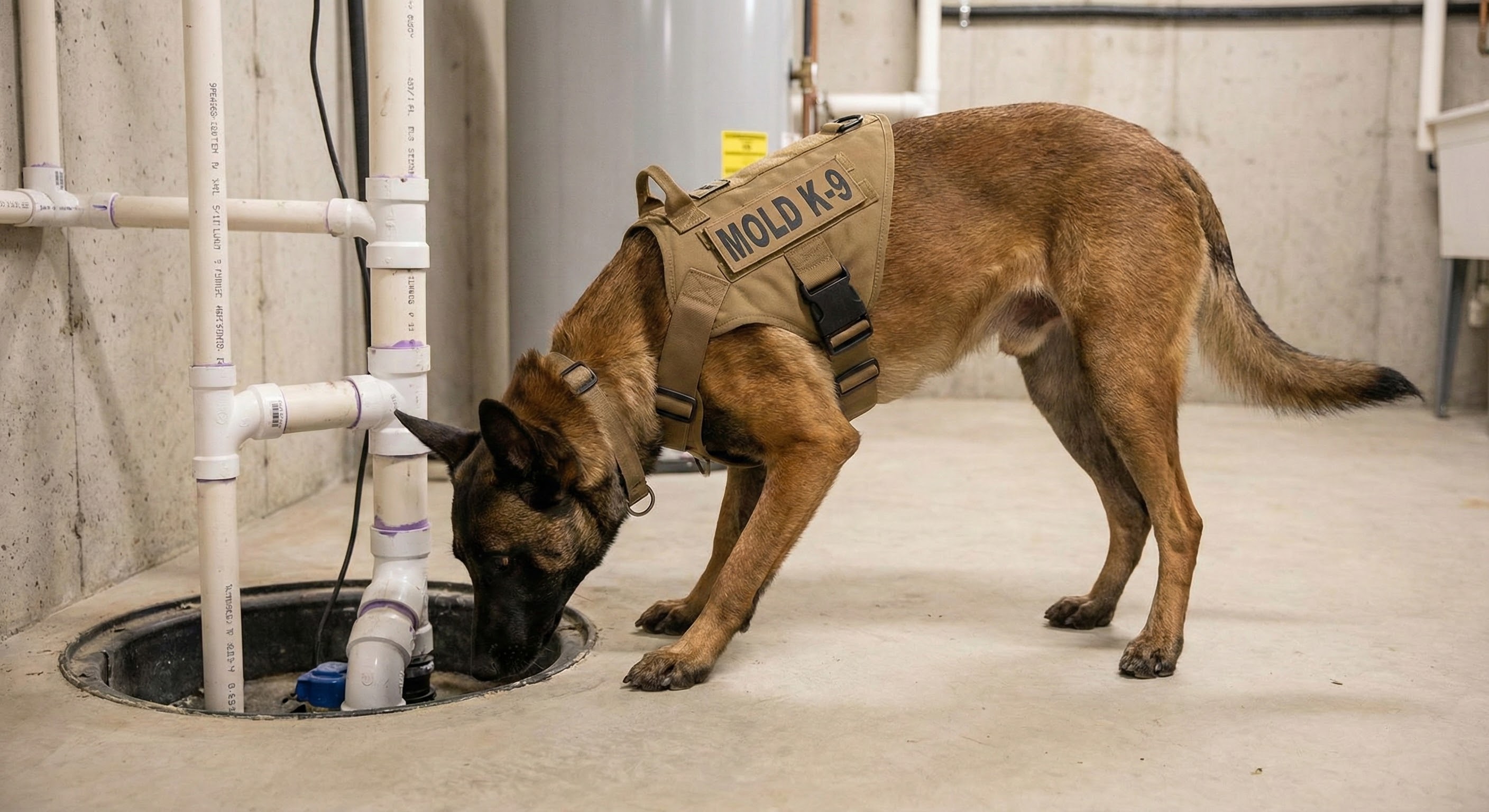
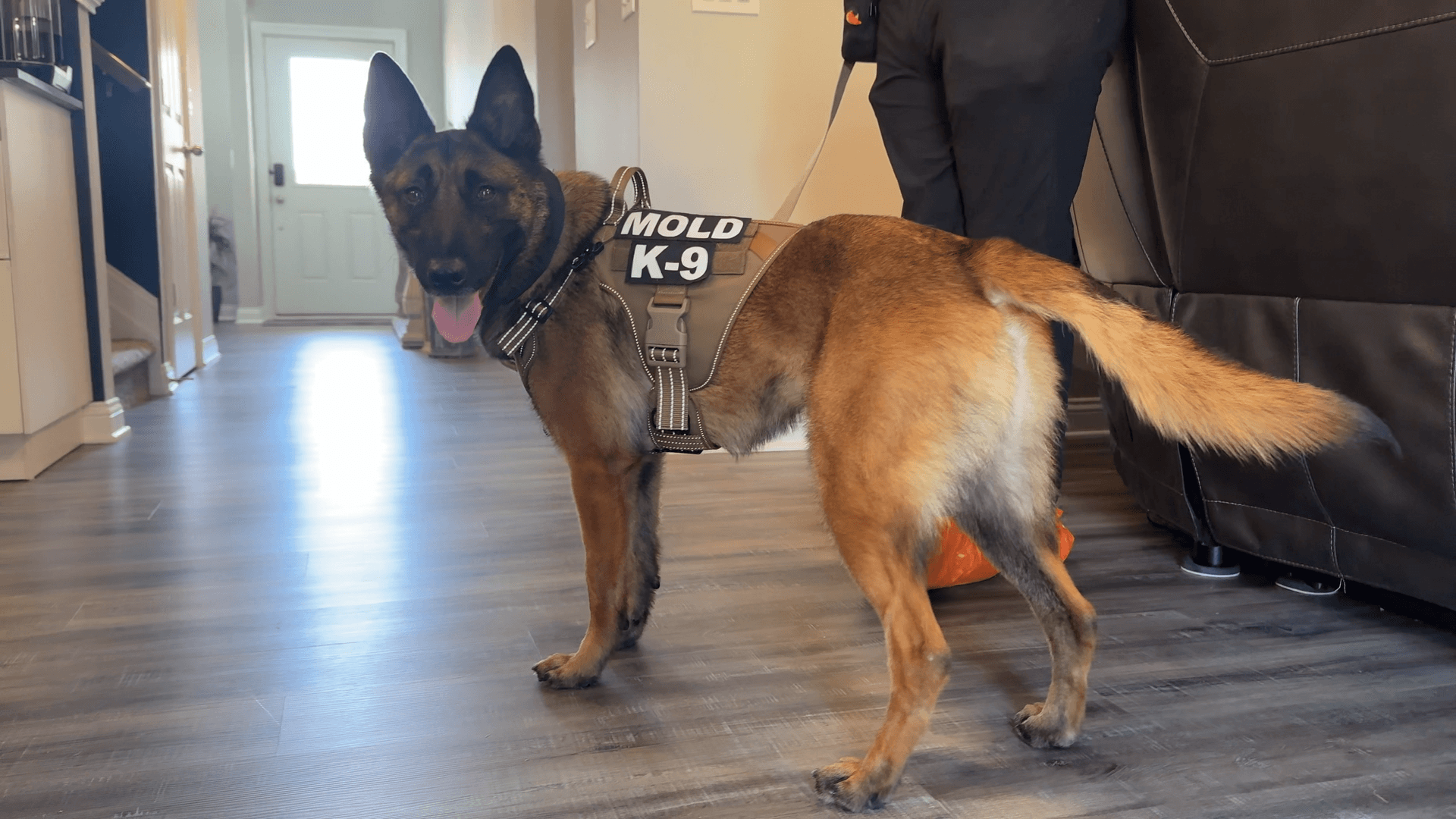
Our dogs are trained to detect the specific chemical scent that mold releases (often called MVOCs). Because gases can travel through drywall, electrical outlets, and floorboards, our dogs can smell mold that is completely sealed away from the human eye.
The "Pinpoint" Advantage
The difference between a human inspection and a K9 inspection is the difference between a guess and a guarantee.
The Human Way: "There is a musty smell in the basement. You should probably tear down the drywall on the north wall to check." (This is expensive, messy, and might be wrong).
The Mold Dog Network Way: The dog walks the room and alerts on one specific 2-foot section of the wall.
We don't need to tear down the whole room. We know exactly where the problem is. This "surgical" accuracy saves you thousands of dollars in unnecessary demolition and repairs.
Stop Guessing with Your Health
If you are dealing with unexplained allergies, brain fog, or a persistent smell that just won't go away, "No visible mold" is not a good enough answer.
You deserve to know what is happening behind your walls.
Don't settle for a visual check of a hidden problem.
Invisible Allergens: Finding the Source of Mold Illness with K9 Scent Detection
Feb 12, 2026
The Hidden Deal-Killer: Using K9 Scent Detection to Protect Your Real Estate Investment
Jan 21, 2026

K9 Mold Detection: Is a Dog's Nose More Accurate Than Air Testing?
Jan 15, 2026
Can a Human Inspector Really See Through Walls? (Why "No Visible Mold" Doesn't Mean You're Safe)
Dec 31, 2025
The "Stop It Before It Starts" Home Maintenance Checklist (2026 Edition)
Dec 31, 2025
Is Your Home Sabotaging Your 2026 Health Goals? The Hidden Link Between "Brain Fog" and Mold
Dec 15, 2025
Why Mold Dog Network Puts Families and Businesses First
Nov 15, 2025

Protecting Kentucky Homes with K9 Mold Detection: Our LEX 18 Interview
Nov 5, 2025

5 Questions to Ask Before Hiring a Mold Inspector in Lexington KY
Oct 15, 2025

Mold and Real Estate: Why Inspections Matter Before You Buy in Lexington
Sep 12, 2025

Schools and Mold: Keeping Kids Safe in Lexington
Aug 22, 2025

Crawl Space & Basement Mold in Lexington: Hidden Threats in Historic Homes
Aug 12, 2025
A Light at the End: Wendy’s Story of Mold, Misdiagnosis, and Hope in Lexington KY
Jul 28, 2025
Why Meeka the Mold Dog Delivers Better Results Than Traditional Testing
Jul 3, 2025

The Hidden Threat Lurking Behind New Walls: Wendy’s Mold Nightmare
Jun 28, 2025

From Figure Skater to Fighting Mold: Christy’s Battle Against Hidden Toxins
Jun 14, 2025

Commercial Mold Inspections in Lexington, KY: Why Businesses Need K9 Detection
May 14, 2025

Why Kentucky Homes Are at Higher Risk for Mold (and What to Do About It)
May 7, 2025
Mold Testing in Lexington Kentucky: What to know
Apr 14, 2025

Why Early Mold Detection Matters in Lexington, KY
Apr 14, 2025

How Mold Detection Dogs Find Hidden Mold Without Tearing Into Walls
Mar 22, 2025

Mold Detection Dogs vs. Air Quality Tests: Which One is More Accurate?
Mar 18, 2025